
What Home Assistant does
Home Assistant is open-source home automation software that runs on your own hardware. It connects devices from more than 1,000 brands, runs automations and dashboards locally, and keeps your data at home.
Home Assistant is a home automation platform that you run on your own hardware. It connects smart home devices and services into one system, so you can control lights, heating, blinds, media players, and energy meters from one place. The project says it is used in more than 2.7 million households.
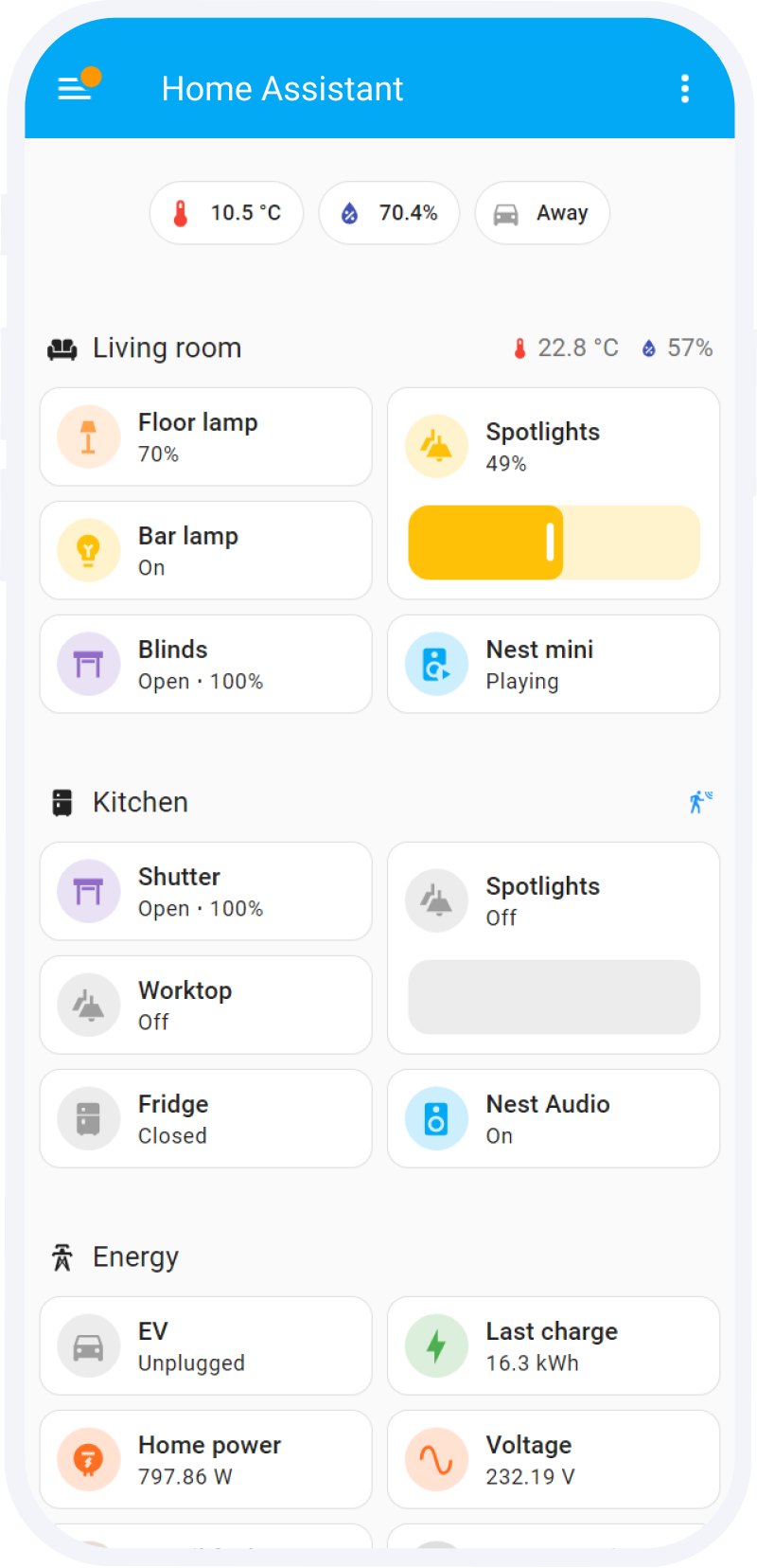
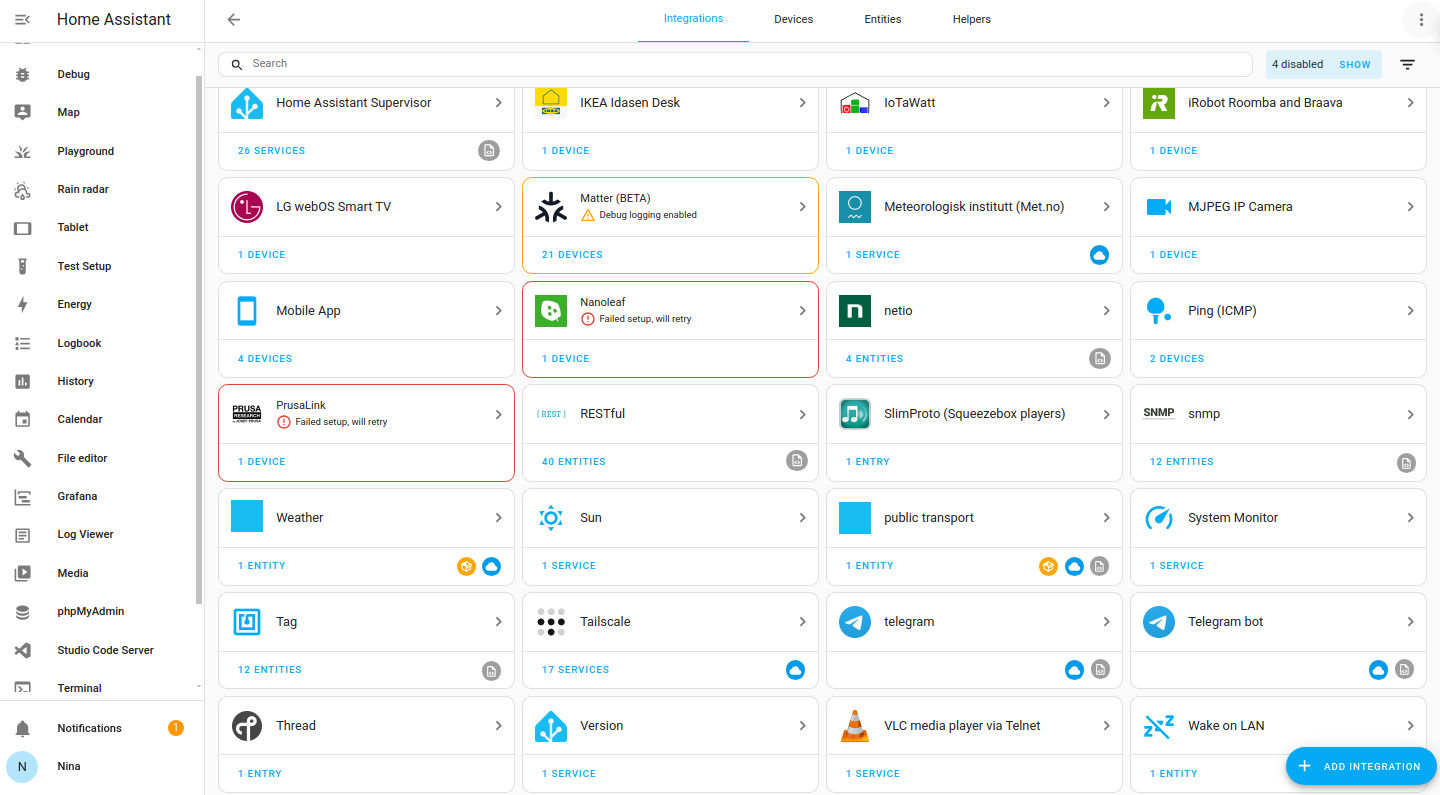
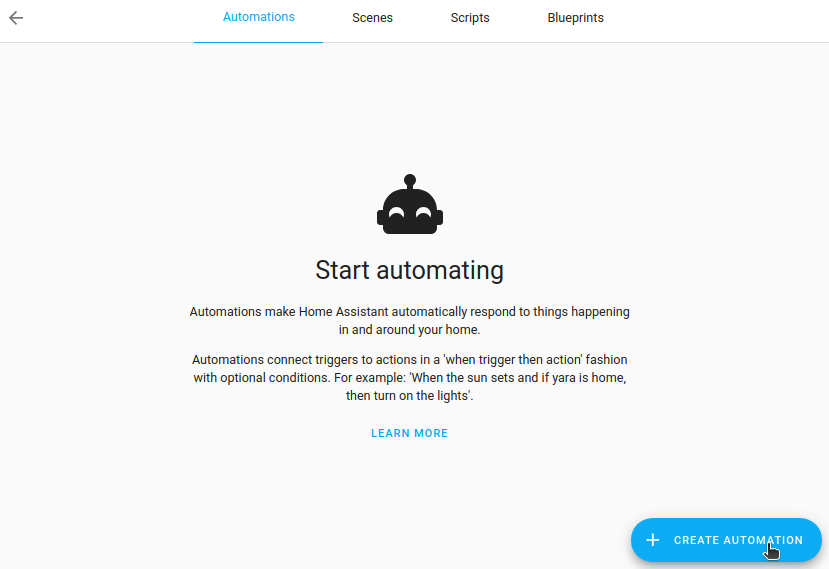
More than 1,000 brands and over 1,500 integrations are supported. After installation, Home Assistant scans your network for known devices and helps you set them up. The automation engine reacts to triggers and conditions, for example turning on the lights at sunset or alerting you when the garage door stays open. Dashboards are built with drag-and-drop cards, and energy management tracks usage and solar production.
The main difference from commercial smart home hubs is local control. Home Assistant talks to devices on your network and processes everything locally, uses the cloud only when a device offers no other option, and keeps working when the internet is down. Assist, the built-in voice assistant, understands natural language and can run on affordable local hardware. You can also use Alexa or Google Assistant, and a Model Context Protocol server integration lets LLM clients such as Claude Desktop control exposed devices.
You can install Home Assistant on the ready-made Home Assistant Green hub, on a Raspberry Pi, Odroid, or x86-64 computer, or in a container or virtual machine. Official companion apps for iOS and Android control the home, send notifications, and report location for presence detection. Apps such as AdGuard and Node-RED can run alongside it.
The software is free and open source under the Apache 2.0 license, and it was a top open-source project by contributors in 2025. It belongs to the Open Home Foundation, a non-profit that cannot be sold or acquired. An optional Home Assistant Cloud subscription from partner Nabu Casa adds remote access and voice assistant integrations and helps fund development.
Best for
Home automation enthusiasts and everyday users who want one private, local system for devices from many different brands.
Not for
People who want a plug-and-play app with no hub, no setup, and no need to learn about devices, integrations, or automations.
Questions and answers
Is Home Assistant free?
Yes. Home Assistant is free and open-source software. Home Assistant Cloud is an optional paid subscription from Nabu Casa that adds remote access and voice integrations.
Does Home Assistant need the cloud?
No. It communicates with devices locally, stores no data in the cloud, and keeps working when the internet is down.
What hardware do I need?
You can buy Home Assistant Green with the software preinstalled, or install it on a Raspberry Pi, an Odroid, an x86-64 computer, or in a container or virtual machine.
Which devices work with Home Assistant?
It integrates with devices and services from over 1,000 brands, and it scans your network to find known devices automatically.
Who is behind Home Assistant?
Home Assistant is a project of the Open Home Foundation, a non-profit organization that cannot be sold or acquired.