
What Obsidian does
Obsidian is a note-taking app that keeps your notes as plain Markdown files on your own device. You link notes, see them in a graph, and extend the app with thousands of community plugins.
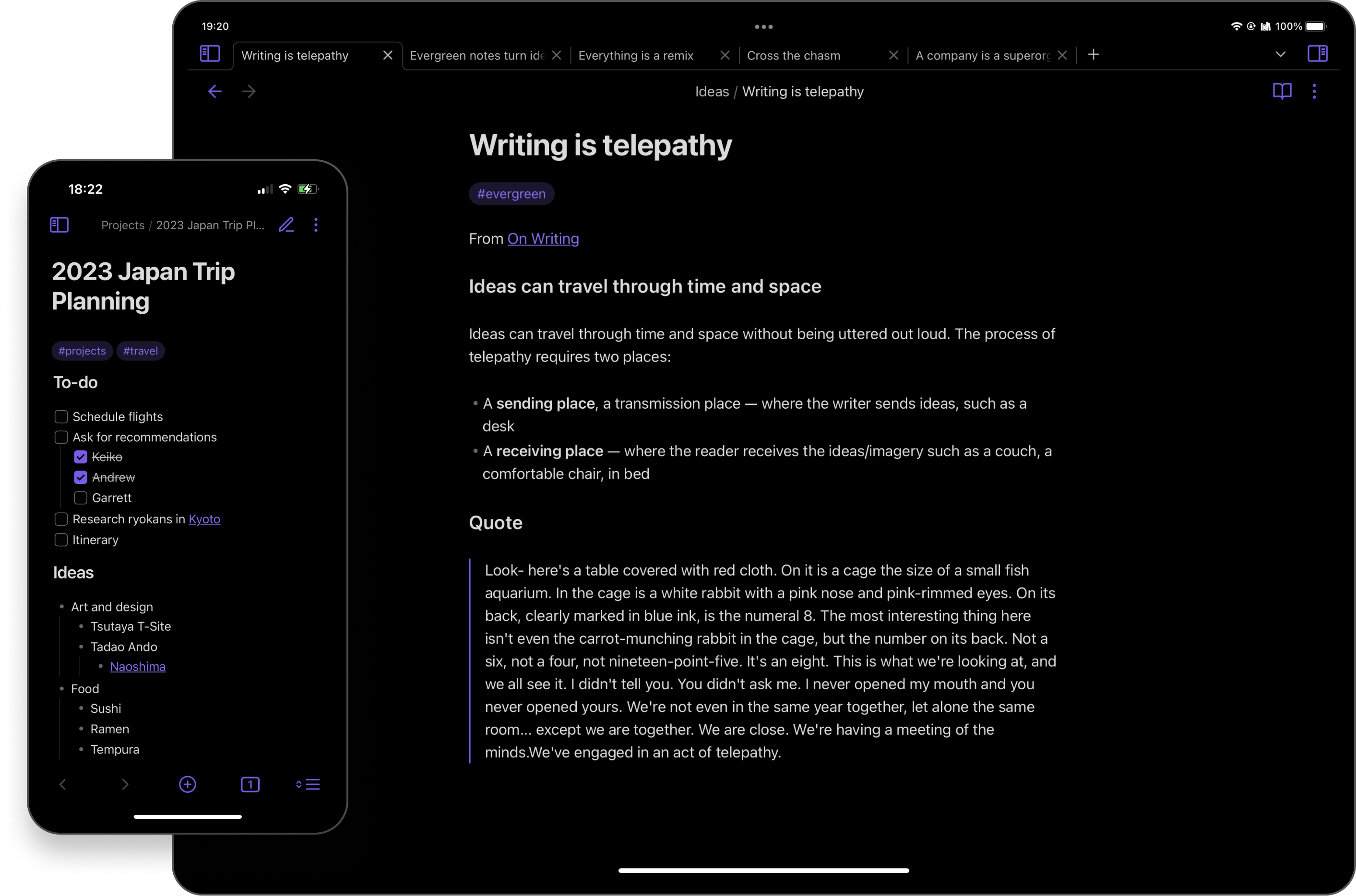
Obsidian is an app for writing and connecting notes. Your notes are stored locally as plain text Markdown files in a folder called a vault, so you can open them quickly, work offline, and keep them readable in other tools. The company says it cannot read your notes, and its apps do not collect telemetry data.
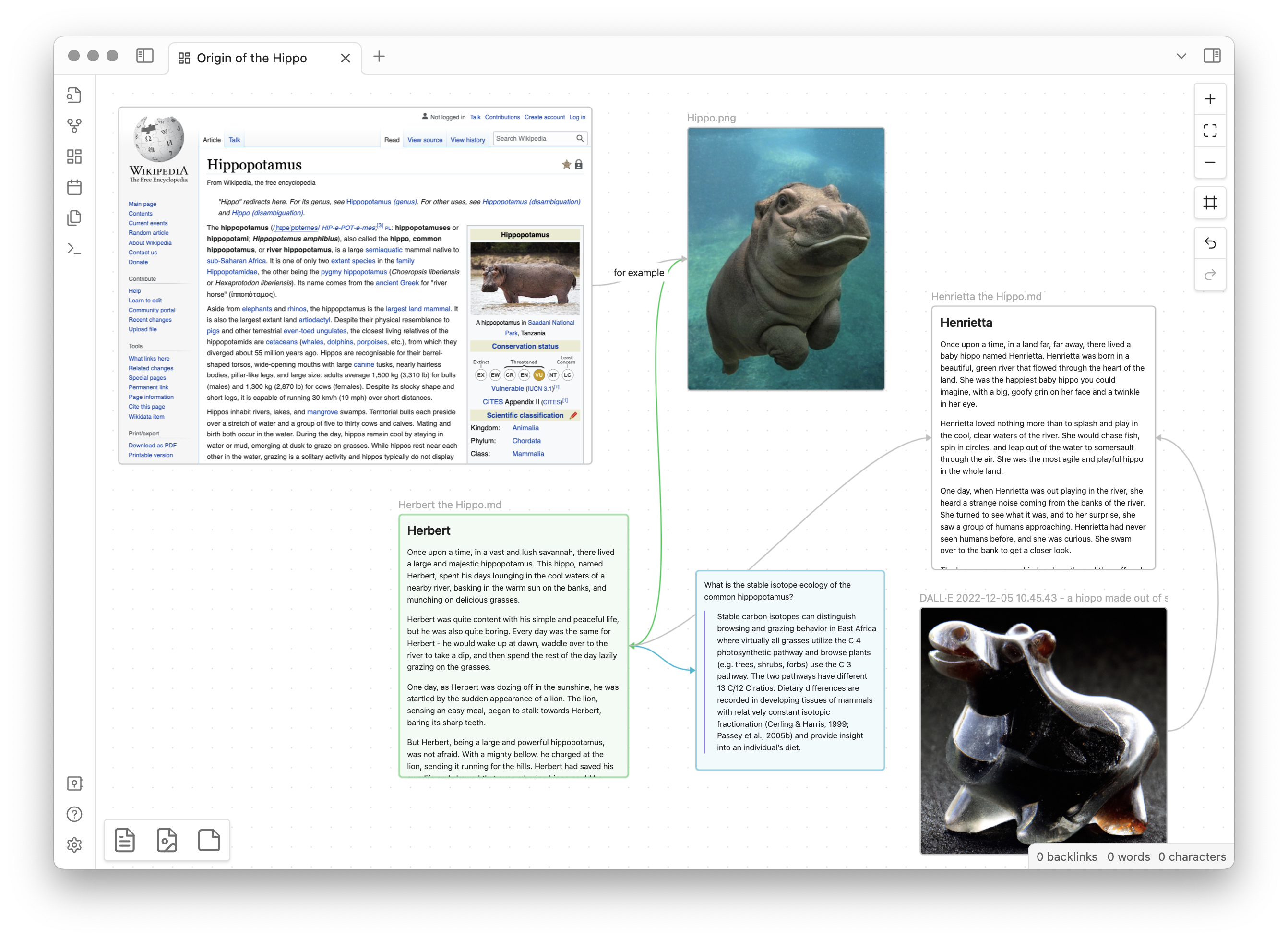
The core idea is linking. You connect notes to each other with links, and each note shows its backlinks, which lets you build a personal wiki of ideas, people, places, and books. A graph view shows how notes relate. Canvas gives you an infinite board for research, brainstorming, and diagrams with notes, images, and web pages side by side. People use Obsidian for personal notes, journaling, knowledge bases, and project management.
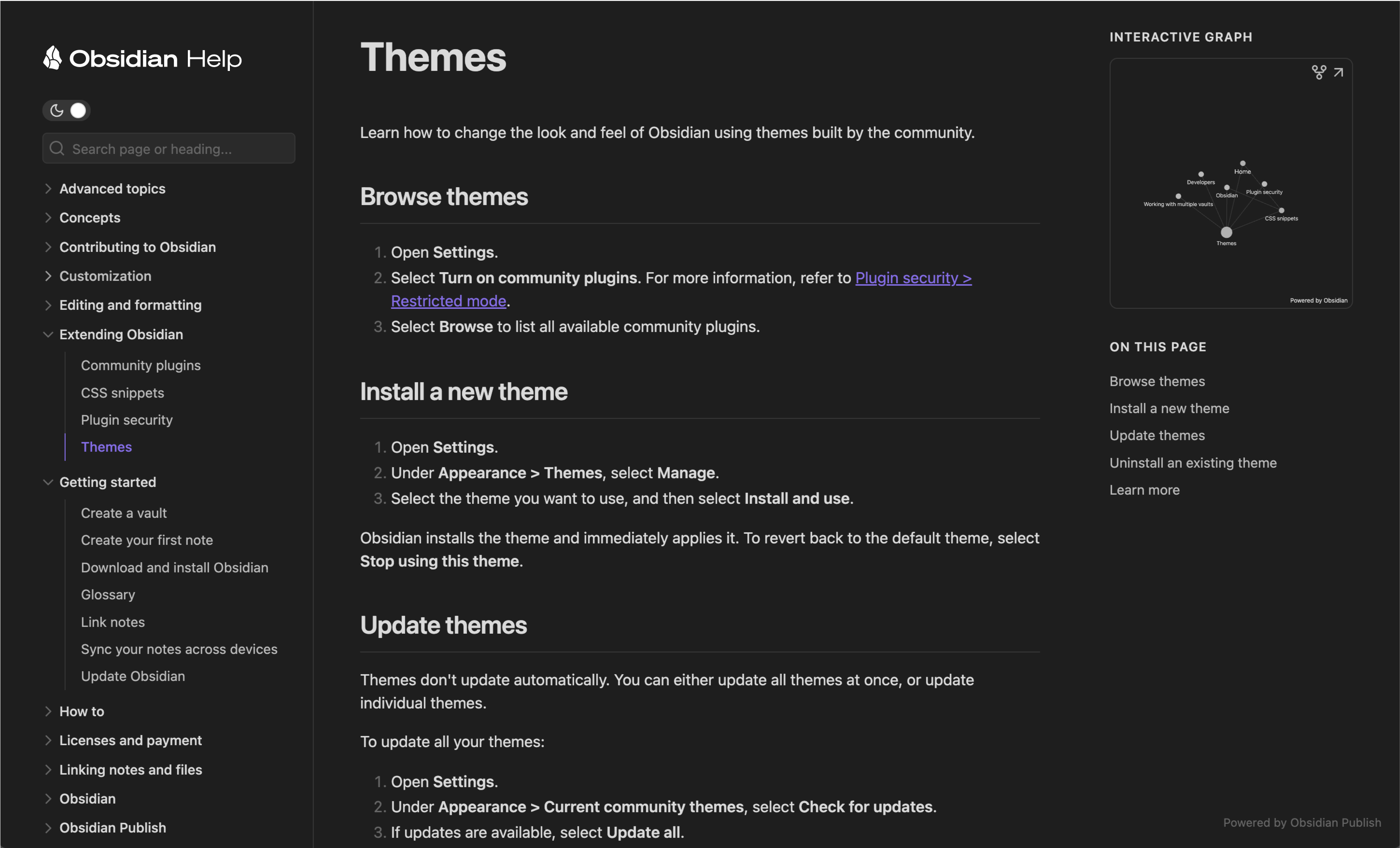
Obsidian is very customizable. Thousands of community plugins and themes change how it works, for example calendar views, Kanban boards, Dataview queries, and task tracking. An open API and developer docs let you build your own plugins, and the Obsidian CLI lets you open, search, and write to your vault from the terminal or from scripts.
The app is free for personal and commercial use with no sign-up. Two optional paid services exist. Sync keeps notes in sync across devices with end-to-end encryption, one year of version history, and shared vaults. Publish turns notes into a website such as a wiki, documentation, or digital garden. A Catalyst license and a Commercial license let users and organizations support development.
Obsidian runs on Windows, macOS, Linux, iOS, iPadOS, and Android, and the Web Clipper extension saves web pages into a vault from most browsers. It is made by a small team, including co-founders Shida Li and Erica Xu and CEO Steph Ango, and it is 100% supported by its users, not investors.
Best for
People who want a private, long-lasting personal knowledge base of linked notes, from students and writers to developers and researchers.
Not for
Teams that need real-time co-editing in a browser, or people who want a web app with no local files to manage.
Questions and answers
Is Obsidian free?
Yes. The app is free without limits and needs no sign-up. You pay only if you choose the optional Sync or Publish services or a supporter license.
Where are my notes stored?
Notes are stored locally on your device as plain text Markdown files. The apps do not collect telemetry, and Sync uses AES-256 end-to-end encryption.
Do I need a license for commercial use?
No. A commercial license is not required, but organizations that use Obsidian for work are encouraged to buy one to support development.
How much do Sync and Publish cost?
Sync is $4 per user per month billed annually or $5 monthly. Publish is $8 per site per month billed annually or $10 monthly.
Which devices does Obsidian run on?
Windows, macOS, Linux, iOS, and Android. The Web Clipper extension works in Chrome, Safari, Firefox, Edge, and other browsers.